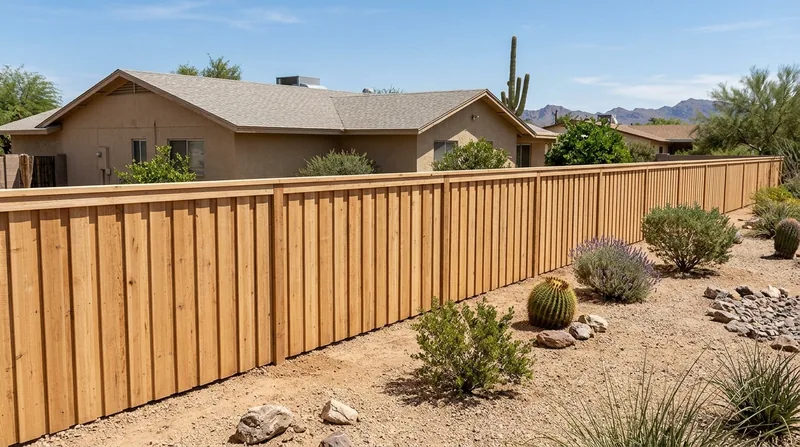




Privacy fence installation in Mesa demands a different approach than fences built in humid climates. Mesa's relentless UV, caliche hardpan, and low-density residential layout mean your wood fence succeeds or fails based on post depth, concrete setting, and species choice, not rot prevention. We install pressure-treated posts set in concrete, cedar or treated-pine pickets in board-on-board or side-by-side configurations, and we tell you honestly when cedar justifies the cost and when treated pine is the smarter call. Since 2015, we have framed privacy fences for side yards, pool enclosures, RV screening, and gate runs across Mesa, Gilbert, Chandler, and the surrounding communities. Most Mesa homes anchor their perimeter with block, so we focus on the runs where wood delivers privacy, character, or screening where a wall cannot.
Why Wood and Privacy Fence Installation Matters in Mesa's Desert Climate
Mesa's climate and terrain are hostile to shortcuts. The caliche layer under most residential lots makes post holes slow and sometimes requires an auger or jackhammer to break through. UV exposure is relentless, and untreated wood fades and splits far faster than humidity ever rots it here. A fence post fails by drying, cracking, and loosening at the ground line, not by rotting at the base. Board-on-board and side-by-side configurations shed water differently, and the choice of species, pressure treatment, and post-setting method determines whether your fence holds for a decade or needs repair in five years.
- Pressure-treated posts set in concrete prevent heave and loosening in Mesa's dry, freeze-free ground.
- Cedar and treated-pine pickets weather differently under continuous UV, affecting lifespan and maintenance cost.
- Board-on-board and side-by-side layouts offer different privacy, wind resistance, and aesthetic appeal for side yards and pool enclosures.
- Caliche hardpan requires experience and the right tools to set posts correctly without blasting through rock or abandoning depth.
Choosing the right material and installation method upfront saves thousands in premature repair or replacement down the line.
Key info: Mesa's block-wall tradition means wood fences are often installed for gates, side yards, and pool barriers rather than full perimeters. This concentrated scope makes species and post-setting choices even more critical, because your fence runs shorter but works harder.
For more on how fence materials perform in desert climates, see our guide to vinyl and PVC fence installation as an alternative material option.
How We Install Wood and Privacy Fences in Mesa: Step-by-Step Process
Our installation begins with a site walk to identify the fence line, check for utility lines using Arizona 811 locates (required by law), and assess the caliche depth and ground conditions. We then set posts in concrete at the correct spacing, typically 6 feet on center, ensuring they are plumb and deep enough to resist wind and ground movement. Pickets are then attached in your chosen configuration, and caps and trim are installed to shed water and protect the top of the fence from UV and weather.
- Call Arizona 811 to mark all underground utilities before we break ground on post holes.
- Measure the fence line, mark post locations, and verify the layout with you on site.
- Auger or hand-dig post holes through caliche to the required depth, typically 2.5 to 3 feet depending on fence height and soil conditions.
- Set posts plumb in concrete mix, allowing concrete to cure before attaching pickets or rails.
- Attach pickets in your chosen pattern, board-on-board for maximum privacy or side-by-side for a cleaner look and lower cost.
- Install caps and trim to protect the fence from sun and weather, extending the life of the wood.
Each step is field-tested, and we adjust for local soil conditions and your specific privacy or screening goals.
Local example: A homeowner in Mesa's 85201 zip code installed a 6-foot board-on-board cedar fence for a side yard to screen an RV, with posts set 6 feet on center in concrete. The caliche layer was 18 inches down, requiring an auger for three of the four post holes. Total install time was one day, and the fence has held plumb for four years with annual re-sealing.
If you need repairs to an existing fence rather than a new installation, our fence repair service covers post replacement, rail repair, and picket replacement at lower cost than a full rebuild.
Wood and Privacy Fence Installation Methods: Board-on-Board vs. Side-by-Side
| Approach | Description | Best for |
|---|---|---|
| Board-on-Board | Pickets overlap slightly, with each side staggered to create a shadowbox effect. Provides maximum privacy and wind resistance. | Pool enclosures, side yards, and RV screening where privacy is the priority. |
| Side-by-Side | Pickets are placed edge-to-edge on one side of the rails, creating a clean, linear appearance. Lower material cost and faster installation. | Budget-conscious projects, gates, and runs where partial visibility or airflow is acceptable. |
| Cedar Pickets | Natural rot resistance and attractive grain, weathers to silver-gray over 5 to 7 years without stain. Higher upfront cost, lower maintenance in dry climates. | Visible fences where aesthetic appeal and longevity justify the premium, especially in Gilbert and Scottsdale neighborhoods. |
| Pressure-Treated Pine Pickets | Factory-treated for rot and insect resistance, fades to gray faster than cedar but costs significantly less. Requires periodic re-sealing to maintain color. | Side yards, RV screening, pool barriers, and projects where budget is the primary concern. |
| Concrete Post Setting | Posts are set in concrete mix, providing superior stability and resistance to heave and frost (though not an issue in Mesa). Standard for all permanent installations. | Every permanent wood fence in Mesa, where ground movement and wind load demand concrete footing. |
Wood and Privacy Fence Installation Cost in Mesa: What to Expect
Wood privacy fence installation in Mesa typically starts at $27 per linear foot for pressure-treated pine in a side-by-side configuration, and rises to $35 to $50 per linear foot for cedar board-on-board with caps and trim. A 100-foot run of treated pine side-by-side costs roughly $2,700 to $3,200 installed, while the same run in cedar board-on-board runs $3,500 to $5,000 depending on post spacing, caliche conditions, and gate openings. The biggest cost drivers are species choice (cedar vs. treated pine), configuration (board-on-board costs more than side-by-side), caliche depth (deep hardpan requires auger or jackhammer work), and site access (tight side yards cost more per foot than open runs).
Getting two or three estimates is always smart, because soil conditions, gate locations, and material preferences vary widely. We provide a free estimate with no obligation, and our pricing is transparent about what drives the final number. For detailed pricing on various configurations and materials, see our full pricing overview.
Wood and Privacy Fence Installation Near Me: What Mesa Homeowners Should Know When Hiring
Hiring a fence installer in Mesa means verifying that the contractor carries proper insurance, understands Arizona's contractor licensing requirements, and can navigate local permitting and HOA rules. Arizona requires a Registrar of Contractors (ROC) license for fence work once labor and materials exceed $1,000, or whenever a building permit is required. Most Mesa neighborhoods, especially master-planned communities, have HOA architectural standards that govern fence height, material, and color, so verification with your HOA is essential before installation begins. Always request a free estimate from at least two contractors, check references with recent customers, and confirm that the contractor will call Arizona 811 for utility locates before digging post holes.
- Verify that the contractor carries general liability and workers' compensation insurance and can provide a certificate of insurance on request.
- Confirm that Arizona law requires an ROC license for fence work above the $1,000 threshold or when permits are required.
- Check your HOA CC&Rs or contact your architectural review board to confirm fence height, material, and color restrictions before you commit to a design.
- Get multiple estimates and ask each contractor to explain the cost differences in material choice, post spacing, and configuration.
- Request references from recent installations in Mesa or nearby communities and follow up with at least two.
- Confirm that the contractor will call Arizona 811 before breaking ground and will work from your property survey or the fence line you identify.
Honest guidance about whether your fence justifies repair or needs replacement is the mark of a contractor worth hiring. For more information or to request a free estimate, contact us at (623) 777-2021.
Wood & Privacy Fence Installation in Mesa: Pricing Guide
| Service | Price | Details |
|---|---|---|
| Pressure-Treated Pine, Side-by-Side | Starting at $27/ft | Posts set in concrete, treated pine pickets, basic trim. Cost rises with caliche depth or tight site access. |
| Pressure-Treated Pine, Board-on-Board | Starting at $35/ft | Overlapped picket configuration for maximum privacy. Higher material and labor cost than side-by-side. |
| Cedar Pickets, Board-on-Board | Starting at $45/ft | Natural rot resistance and aesthetic appeal. Weathers to silver-gray without stain. Premium species cost offset by longer lifespan and lower maintenance. |
| Caliche Auger or Jackhammer Work | Add $150-$400 | Required when hardpan layer is deep. Cost depends on number of post holes and caliche thickness at your site. |
| Free Estimate | No obligation | Response within 24 hours. Call (623) 777-2021 with your fence line length and material preference. |
Indicative pricing, the exact cost depends on square footage, finish, and site access. Free personalized estimate within 24h at (623) 777-2021.


